
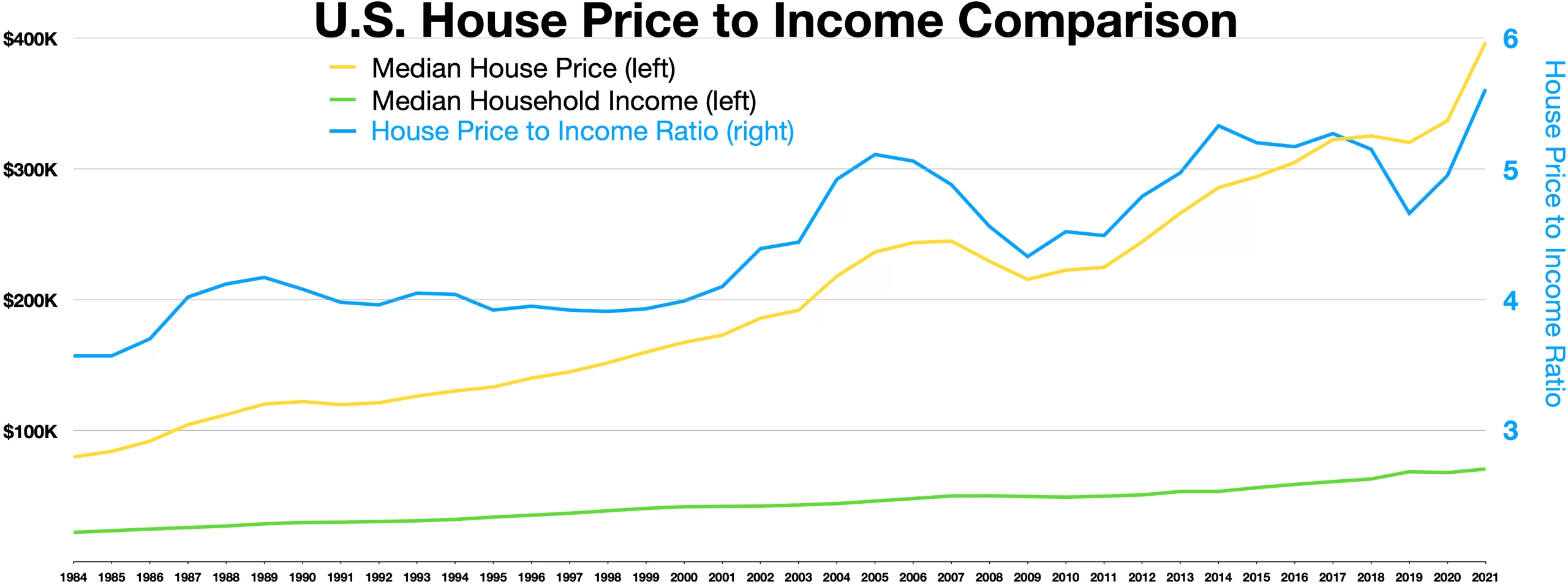
House Price-to-Income Ratio: Worst Fall in 11 Years
The house price-to-income ratio has fallen to an 11-year low, highlighting a significant shift in the real estate market as mortgage costs continue to rise.
Understanding the House Price-to-Income Ratio
The house price-to-income ratio is an essential metric used to assess housing affordability within a specific region. It is calculated by dividing the median house price by the median household income. This ratio provides insight into how easily individuals can afford to buy homes based on their earnings.
Over the past few years, the house price-to-income ratio has drawn significant attention due to escalating housing costs. As mortgage rates rise, many potential buyers find themselves priced out of the market, leading to a notable decline in housing demand. The current economic landscape has contributed to the worst fall in this ratio in 11 years, highlighting the growing disparity between home prices and income levels.
Key factors influencing the house price-to-income ratio include:
- Interest Rates: Higher mortgage rates increase monthly payments, making it more challenging for buyers to secure homes.
- Income Growth: Stagnant wages can exacerbate the affordability crisis, limiting purchasing power.
- Market Trends: Increased demand and low inventory often drive prices upward, further impacting the ratio.
As the house price-to-income ratio continues to decline, analysts are concerned about the long-term implications for the housing market and overall economic health.
Current Trends in Mortgage Costs
The current landscape of mortgage costs is contributing significantly to the evolving dynamics of the housing market. As interest rates rise, many potential homebuyers are feeling the pinch, which is reflected in the house price-to-income ratio. This ratio, a critical indicator of housing affordability, has recently hit an 11-year low, signaling a shift in market conditions.
Several factors are influencing mortgage costs at this time:
- Increased Interest Rates: Central banks have raised rates in response to inflationary pressures, making borrowing more expensive.
- Stricter Lending Standards: Financial institutions are tightening their lending criteria, leading to fewer approved mortgages.
- Reduced Housing Supply: A limited number of homes available for sale is driving prices up, while incomes have not kept pace.
As a result, many prospective buyers are finding it increasingly challenging to enter the market. The elevated mortgage costs coupled with the declining house price-to-income ratio are creating a challenging environment for homeownership. Experts anticipate that these trends could persist, further complicating the landscape for both buyers and sellers. The implications for the housing market could be profound, potentially affecting investment and economic growth moving forward.
Impact of Rising Mortgage Rates
The impact of rising mortgage rates has been significant on the housing market, contributing to a decline in the house price-to-income ratio. As borrowing costs increase, potential homebuyers face higher monthly payments, which can deter them from entering the market. This shift has led to a decrease in demand, causing prices to adjust downward in some areas.
Many analysts have noted that the surge in mortgage rates has made homeownership less attainable for average families. The house price-to-income ratio, which measures the affordability of housing relative to income levels, has reached an 11-year low. This situation reflects the broader economic pressures that households are experiencing.
Several key factors are influencing this trend:
- Increased borrowing costs: As interest rates rise, the cost of financing a home has escalated, impacting affordability.
- Economic uncertainty: Many potential buyers are hesitant to commit to large purchases amid fears of a recession.
- Wage stagnation: While housing costs rise, wages have not kept pace, further straining the house price-to-income ratio.
As the situation evolves, experts predict that the interplay between mortgage rates and housing prices will continue to shape the market dynamics. Understanding these factors is crucial for both buyers and sellers navigating this challenging landscape.
Historical Context of Housing Affordability
The house price-to-income ratio has been a critical indicator of housing affordability for decades, serving as a benchmark for both potential homebuyers and policymakers. Historically, this ratio has fluctuated based on various economic factors, including interest rates, wage growth, and housing supply.
In the early 2000s, the ratio saw a significant increase, driven by rising home prices that outpaced income growth. Many families found themselves struggling to afford homes, leading to growing concerns about housing affordability. The situation peaked around 2006, when the housing market experienced unsustainable growth, culminating in the financial crisis of 2008.
In the years that followed, the house price-to-income ratio gradually declined as prices stabilized and interest rates remained low. This created a more favorable environment for homebuyers, allowing many to enter the market. However, as the economy recovered and demand surged, prices began to rise again.
Today, with the recent fall in the house price-to-income ratio to an 11-year low, many are questioning the sustainability of current market conditions. The combination of rising mortgage costs and stagnant wage growth is creating a challenging landscape for prospective buyers, raising concerns about long-term housing affordability.
- 2000s: Significant increase in the ratio
- 2006: Peak before the financial crisis
- Post-2008: Gradual decline in the ratio
Future Predictions for the Real Estate Market
As the real estate market continues to adjust to the recent economic shifts, future predictions regarding the house price-to-income ratio suggest a complex landscape ahead. Analysts are closely monitoring the interplay between rising mortgage rates and the affordability crisis that has emerged.
Many experts believe that the ongoing increase in mortgage costs will further exacerbate the current housing affordability challenges. With the house price-to-income ratio at an 11-year low, potential buyers may find themselves priced out of the market, leading to a decrease in demand. This scenario could force sellers to reconsider their pricing strategies.
Additionally, the impact of inflation on household incomes could affect the ratio adversely. As wages struggle to keep pace with the rising cost of living, the gap between home prices and income may widen even further. Some economists predict that if the trend continues, we could see a slowdown in housing price growth, or even a decline in certain markets.
However, there are also optimistic views, suggesting that stabilizing interest rates and increased housing supply may eventually restore balance. Investors and homeowners alike will need to remain vigilant, as the future of the real estate market hinges on various economic factors that could shift the house price-to-income ratio dramatically.
Ways to Navigate Rising Costs
As homeowners and potential buyers grapple with the implications of a declining house price-to-income ratio, navigating rising costs becomes increasingly essential. Here are several strategies to manage expenses during this challenging time:
- Evaluate Your Budget: Assess your current financial situation and make adjustments to your budget. Identify non-essential expenses that can be reduced or eliminated to accommodate rising housing costs.
- Consider Alternative Housing Options: Explore different neighborhoods or types of housing. Opting for less expensive areas or smaller properties can help mitigate the impact of the current market conditions.
- Increase Income Streams: Look for opportunities to boost your income, whether through a side job, freelance work, or investing in skills that can lead to a promotion or better job prospects.
- Stay Informed: Keep abreast of changes in the housing market and mortgage rates. Understanding market dynamics can help you make more informed decisions regarding your home purchase or investment.
- Consult Financial Experts: Seek advice from real estate professionals or financial advisors. They can provide valuable insights tailored to your specific situation, helping you navigate the complexities of buying in a tough market.
By employing these strategies, individuals can better cope with the rising costs associated with the current house price-to-income ratio trends.
Advice for Potential Home Buyers
As potential home buyers navigate the current real estate landscape, it is crucial to understand the implications of the falling house price-to-income ratio. With the ratio at its lowest in over a decade, many buyers may feel a sense of urgency to enter the market before prices rise further. However, it is essential to approach this decision with caution.
Here are some tips for prospective buyers:
- Assess Your Finances: Before diving into home buying, evaluate your financial situation thoroughly. Consider your savings, existing debts, and future income stability.
- Research the Market: Understanding local market trends can help you identify areas where prices may be more favorable. Look for neighborhoods with potential for growth.
- Consult Professionals: Engage with real estate agents and financial advisors who can provide valuable insights into the current market dynamics and help you make informed decisions.
- Be Prepared for Compromises: In a competitive market, flexibility is key. You may need to adjust your expectations regarding home size, location, or amenities.
- Consider Long-term Implications: Think about your future needs and how the house price-to-income ratio might evolve. Investing in a home should align with your long-term financial goals.
By keeping these tips in mind, buyers can navigate the challenges of the current market while making sound investment decisions.
Government Policies Affecting Housing Market
Government policies play a crucial role in shaping the housing market, significantly impacting the house price-to-income ratio. As the ratio continues to drop to an 11-year low, policymakers are being urged to take action to address the growing concerns surrounding housing affordability.
Several recent measures have been enacted to tackle rising housing costs, including:
- Increased Housing Supply: Initiatives aimed at boosting the construction of affordable homes have been prioritized, with the goal of providing more options for potential buyers.
- Subsidies and Grants: First-time homebuyer programs and financial assistance for low-income families have been expanded to help mitigate the impact of high mortgage rates.
- Tax Incentives: Local governments are exploring tax breaks for developers who focus on building affordable housing, thus encouraging investment in this sector.
Despite these efforts, many experts argue that more comprehensive strategies are needed to effectively address the challenges posed by the current economic climate. As the house price-to-income ratio continues to fall, the pressure on legislators to respond effectively intensifies.
Ultimately, the success of these government policies will determine whether the housing market can recover from its current state and restore affordability for future generations.
By Wikideas1 via Openverse
Read the original
Related reading


